20th Sep 2026
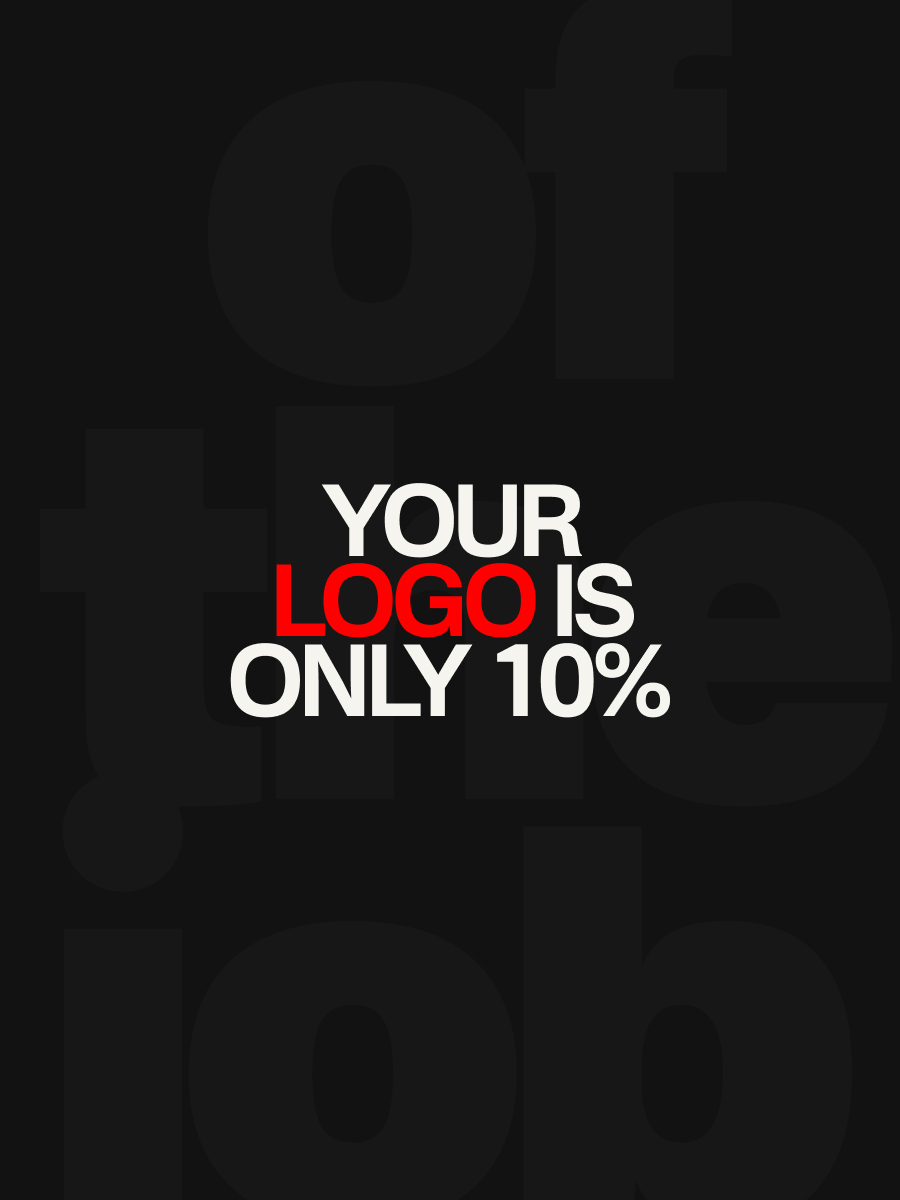
The Difference Between a Logo and Brand Identity (And Why It Costs Founders More Than They Think)
Most founders don't confuse a logo with a brand because they don't care. They confuse the two because, for a long time, the logo is the only visible thing they own.
The product is still changing. The messaging isn't settled. The website gets rewritten every few weeks. Packaging evolves with every new supplier. But the logo? That feels permanent. So naturally, it becomes the thing everyone obsesses over.
The trouble starts when the logo is expected to do work it was never meant to do.
A logo is recognition. An identity is reassurance.
Think about the brands you buy from without thinking twice. Chances are, you don't remember every detail of their logo. What you remember is how the website feels, how the packaging looks on your kitchen counter, how their emails sound, how their Instagram posts seem unmistakably theirs even before you notice the name.
None of that lives inside the logo.
It lives in the system around it.
That's what an identity really is. It's the collection of decisions that make a business feel familiar wherever someone encounters it. Colours, typography, photography, tone of voice, layouts, packaging, motion, even the way buttons behave on a website. Individually, none of these elements carry much weight. Together, they create recognition long before someone consciously notices your logo.
Ironically, many founders only realise this after they've paid for multiple logo redesigns.
The first logo doesn't "feel premium." So it's redesigned.
A year later it doesn't "stand out." Another redesign.
Then competitors start looking sharper, so the logo changes again.
From the outside, it looks like progress.
From the customer's perspective, it looks like a company that keeps introducing itself.
The expensive part isn't the redesign invoice. It's the recognition that gets reset every time the business changes the one thing customers were beginning to remember.
Often, the logo wasn't the problem to begin with.
The business had inconsistent packaging. Different fonts across every touchpoint. Product pages that looked unrelated to social posts. Ads that felt disconnected from the website. Every piece was designed in isolation, so nothing accumulated into familiarity.
Changing the logo in that situation is like repainting your front door while the rest of the house keeps changing shape.
It feels productive because it's visible.
It solves very little.
The strongest identities aren't built from extraordinary individual pieces. They're built from ordinary pieces that keep showing up the same way. Over time, customers stop analysing them. They simply recognise them.
That's a far more valuable position to occupy than being visually impressive for a few seconds.
Founders often ask whether they should invest in a better logo.
It's usually the wrong question.
A better question is this: if you removed your logo entirely, would people still know they're looking at your business?
Would they recognise your product page? Your shipping box? Your emails? Your social posts? Your store shelf? Your photography? Your typography?
If the answer is no, another logo probably won't change much.
If the answer is yes, the logo suddenly becomes much more powerful—not because it changed, but because everything around it started supporting it.
That's the part that quietly compounds over time.
Customers rarely remember a logo in isolation.
They remember the feeling of repeatedly seeing the same business show up in the same voice, with the same visual cues, in every place that mattered.
The logo gets the credit.
The identity did the work.
Your business shouldn’t
be waiting on its brand.
Have a brand to build, fix, or take further?
Tell us what you’re working on.
We’ll figure out the right next step together.